Computational Drug Discovery and Molecular Docking
About Course
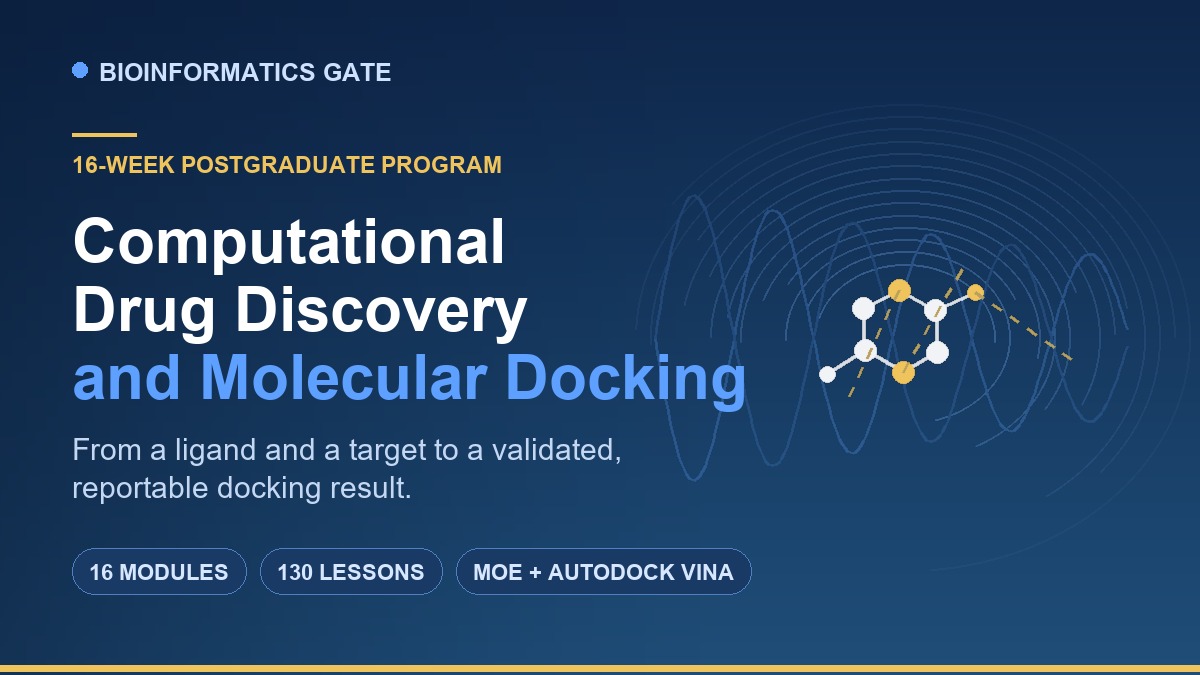
About This CourseComputational Drug Discovery and Molecular Docking is a 16-week, Arabic-taught computational drug discovery course that takes you through the full in-silico pipeline: from a ligand and a target protein, to a validated docking result, to a written scientific report. It is built for MSc and PhD students and researchers in pharmacy, medicinal chemistry, biochemistry, biotechnology and bioinformatics. Sixteen modules, 130 lessons, every tool taught hands-on, and no programming background is needed.
Who Is This Course For?If you have a target protein and a set of compounds and you do not know where to start, or you have already run a docking job, got a score, and could not defend that score in front of your supervisor, this course is for you. It is written for MSc and PhD students and researchers in pharmacy, medicinal chemistry, biochemistry, biotechnology, bioinformatics and medicine, and for anyone who has to produce in-silico results that survive a referee. It also fits a university department that wants a ready 16-week postgraduate module instead of building one.
What You Will LearnYou start with the CADD pipeline and the file formats that carry it (SDF, PDB, FASTA, TSV, PDBQT). You then retrieve and curate your data: ligands from PubChem, ChEMBL, DrugBank and ZINC, structures from the RCSB PDB, annotation from UniProt, InterPro and KEGG, and target context from STRING and Cytoscape. You profile drug-likeness and toxicity with MolSoft, SwissADME and ProTox. You then move into docking proper: the theory of scoring functions and force fields, receptor and ligand preparation, and grid box design with its real parameters (centre, size, exhaustiveness, num_modes, energy_range). You run the full workflow twice, in MOE and in AutoDock Vina with PyRx, screen a compound library, bring an AI assistant into the setup and verify what it proposes against the crystal ligand, analyse the binding with interaction fingerprinting, validate with decoys and enrichment, and finish with an introduction to molecular dynamics in GROMACS and the reporting standards for publication.
How the Course WorksSixteen modules, one for each week, and every module builds on the one before it. The lessons are short Arabic videos with a downloadable guide, and the order is fixed: you never meet a tool before the lesson that explains what it does. Each module ends with a quiz that explains every answer, and twelve of the sixteen weeks carry a practical lab on the case study. There is a live session with the instructor every week, and the independent project runs quietly alongside the course from Week 6 to the defence in Week 16.
- Retrieve and curate ligand, protein and annotation data from PubChem, RCSB PDB, UniProt, InterPro, KEGG, ChEMBL and DrugBank.
- Predict drug-likeness, ADME and toxicity for a small molecule with SwissADME and ProTox, and read the output critically.
- Define a binding site and a docking box with a justified, reproducible method instead of copying one from a tutorial.
- Run the full docking workflow in two engines, MOE and AutoDock Vina with PyRx, and screen a compound library.
- Validate a docking run with redocking, decoys and enrichment, and analyse protein-ligand interactions with fingerprinting.
- Write a complete in-silico study with its parameters, its software versions and its limitations stated.
Your Final ProjectYou do not repeat the class case study. From Week 6 you choose your own ligand and your own target, from your thesis or your lab, and you take that pair through the whole pipeline: data retrieval, ADMET, box design, docking in two engines, validation, interaction analysis, and a written report. You submit your input files, your parameters and your software versions so the work can be reproduced, and you defend it in Week 16 as a poster or a ten-minute talk.
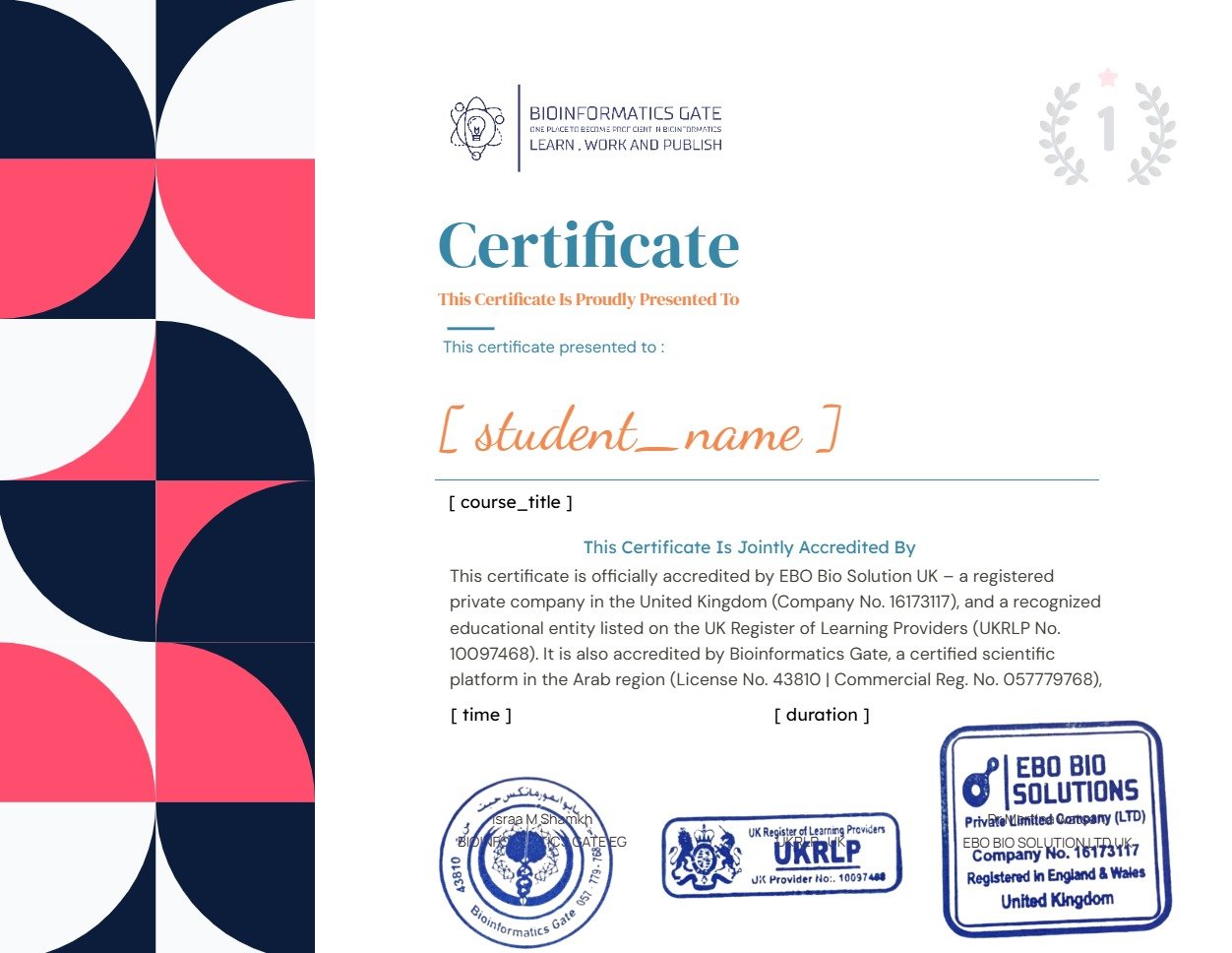
Assessment and CertificateTwenty-eight module quizzes with an explanation for every answer, a 43-question final examination, twelve practical labs, one running workflow report on the class case study, and the independent project with its defence. After completing the course you receive a Bioinformatics Gate certificate.
Course DurationAbout 38 hours of video lessons across 16 modules. The suggested pace is 16 weeks, one module a week, at roughly four to six hours of study a week including the lab.
RequirementsA computer with at least 8 GB of RAM and a stable internet connection. Free accounts on PubChem, RCSB PDB, UniProt, SwissADME, ProTox and STRING, all of which are free. A MOE licence is useful but not required: the free path through PyRx and AutoDock Vina covers every practical week. Basic organic or medicinal chemistry and introductory biochemistry are assumed. No programming background is needed, and Python appears in two optional lessons only.
عن الكورسكورس Computational Drug Discovery and Molecular Docking ده كورس تصميم الأدوية بالكمبيوتر، عملي وبالعربي، ومدته 16 أسبوع. بياخدك في البايبلاين كامل: من الليجاند والتارجت، للدوكينج المتحقق منه، للتقرير العلمي المكتوب. معمول لطلاب الماچستير والدكتوراه والباحثين في الصيدلة والكيمياء الطبية والبيوكيمستري والبيوتكنولوجي والبايوإنفورماتكس. 16 موديول، 130 درس، كل أداة بتتشرح بإيدك، ومش محتاج أي خلفية برمجة.
الكورس ده لمين؟لو عندك بروتين تارجت ومجموعة مركبات ومش عارف تبدأ منين، أو عملت دوكينج وطلع لك سكور ومعرفتش تدافع عنه قدام المشرف، فالكورس ده ليك. معمول لطلاب الماچستير والدكتوراه والباحثين في الصيدلة والكيمياء الطبية والبيوكيمستري والبيوتكنولوجي والبايوإنفورماتكس والطب، ولأي حد لازم يطلع نتايج in-silico تعدي من المُحكّم. وكمان مناسب لقسم جامعي عايز موديول دراسات عليا جاهز 16 أسبوع بدل ما يبنيه من الأول.
هتتعلم إيه؟هتبدأ من البايبلاين بتاع الـCADD والـfile formats اللي شايلاه (SDF وPDB وFASTA وTSV وPDBQT). بعدها تجيب الداتا وتنضفها: ليجاندات من PubChem وChEMBL وDrugBank وZINC، وستراكشر من RCSB PDB، وأنوتيشن من UniProt وInterPro وKEGG، وسياق التارجت من STRING وCytoscape. تعمل profiling للـdrug-likeness والتوكسيستي بـMolSoft وSwissADME وProTox. وبعدين تدخل الدوكينج نفسه: نظرية الـscoring functions والـforce fields، وتجهيز الريسبتور والليجاند، وتصميم الـgrid box بالباراميترات الحقيقية (المركز، الحجم، exhaustiveness، num_modes، energy_range). هتعمل الـworkflow كامل مرتين، في MOE وفي AutoDock Vina مع PyRx، وتعمل screening لمكتبة مركبات، وتدخّل الـAI في الـsetup وتتأكد من اللي اقترحه بالـcrystal ligand، وتحلل الـbinding بالـinteraction fingerprinting، وتعمل validation بالـdecoys والـenrichment، وتقفل بمقدمة Molecular Dynamics في GROMACS ومعايير كتابة التقرير للنشر.
الكورس ماشي إزاي؟16 موديول، واحد لكل أسبوع، وكل موديول بيبني على اللي قبله. الدروس فيديوهات عربية قصيرة ومعاها جايد للتحميل، والترتيب مظبوط: عمرك ما هتقابل أداة قبل الدرس اللي بيشرح بتعمل إيه. كل موديول بيخلص بكويز بيشرح كل إجابة، و12 أسبوع من الـ16 فيهم Practical Lab على الـcase study. وفيه Live Session مع المحاضر كل أسبوع، والمشروع المستقل ماشي معاك من الأسبوع السادس لحد المناقشة في الأسبوع الـ16.
- تجيب داتا الليجاند والبروتين والأنوتيشن وتنضفها من PubChem وRCSB PDB وUniProt وInterPro وKEGG وChEMBL وDrugBank.
- تتنبأ بالـdrug-likeness والـADME والتوكسيستي لأي مركب بـSwissADME وProTox، وتقرا النتيجة بعين ناقدة.
- تحدد الـbinding site والـdocking box بطريقة مبرَّرة وقابلة للتكرار، مش منقولة من تيوتوريال.
- تعمل الـworkflow كامل في إنچينين، MOE وAutoDock Vina مع PyRx، وتعمل screening لمكتبة مركبات.
- تعمل validation للدوكينج بالـredocking والـdecoys والـenrichment، وتحلل التفاعلات بالـinteraction fingerprinting.
- تكتب دراسة in-silico كاملة بالباراميترات ونسخ البرامج وحدودها مكتوبة بوضوح.
مشروعك النهائيمش هتعيد الـcase study بتاعة الكورس. من الأسبوع السادس بتختار الليجاند والتارجت بتوعك إنت، من رسالتك أو من الـlab، وتمشّي الاتنين في البايبلاين كله: جمع الداتا، والـADMET، وتصميم الـbox، والدوكينج في إنچينين، والـvalidation، وتحليل التفاعلات، والتقرير المكتوب. وبتسلّم ملفات الإدخال والباراميترات ونسخ البرامج عشان الشغل يتكرر، وتناقشه في الأسبوع الـ16 بوستر أو بريزنتيشن 10 دقايق.
التقييم والشهادة28 كويز للموديولات وكل إجابة متشروحة، وامتحان نهائي 43 سؤال، و12 Practical Lab، وتقرير workflow واحد ماشي على الـcase study بتاعة الكورس، والمشروع المستقل ومناقشته. وبعد ما تخلص بتاخد شهادة من Bioinformatics Gate.
مدة الكورسحوالي 38 ساعة فيديو موزعة على 16 موديول. والمدة المقترحة 16 أسبوع، موديول كل أسبوع، بمعدل 4 لـ6 ساعات مذاكرة في الأسبوع بالـlab.
المتطلباتكمبيوتر بـ8 چيجا رام على الأقل، وإنترنت ثابت. وحسابات مجانية على PubChem وRCSB PDB وUniProt وSwissADME وProTox وSTRING، وكلها مجانية. رخصة MOE مفيدة بس مش شرط: المسار المجاني بـPyRx وAutoDock Vina بيغطي كل الأسابيع العملية. مفترض إن عندك أساسيات الكيمياء العضوية أو الطبية ومقدمة بيوكيمستري. ومش محتاج خلفية برمجة، والـPython بيظهر في درسين اختياريين بس.
Frequently Asked Questions
Do I need a programming background?No. The course is built so that no week depends on writing code. Python appears in two optional lessons only, and they are explained step by step.
Do I need a paid MOE licence?No. MOE is used in the guided workflow, but the free path through PyRx and AutoDock Vina covers every practical week, and the validation and reporting weeks work on either engine.
I am a pharmacy or biology student, not a bioinformatician. Is this course for me?Yes. The course assumes chemistry and biochemistry basics, not computing. Everything computational is taught from the first lesson, and the final project is from your own field.
Where do the lessons come from?From Bioinformatics Gate's own courses. The 130 lessons already exist across our drug discovery track, and this course arranges them into one ordered 16-week path with the labs, the quizzes, the live sessions, the project and the certificate.
Is the work good enough for a thesis chapter or a paper?For the in-silico part, yes. Week 14 teaches the validation a referee asks for, redocking, decoys and enrichment and a comparison between two engines, and Week 16 teaches the reporting standard, including the limitations section.
What if I miss the live session?The live sessions are not recorded, but they run every week, so you can bring your question to the next one.
أسئلة شائعة
محتاج خلفية برمجة؟لأ. الكورس متبني إن مفيش أسبوع بيعتمد على كتابة كود. الـPython في درسين اختياريين بس، ومشروحين خطوة بخطوة.
محتاج رخصة MOE مدفوعة؟لأ. MOE بيتستخدم في الـworkflow المشروح، بس المسار المجاني بـPyRx وAutoDock Vina بيغطي كل الأسابيع العملية، وأسابيع الـvalidation والتقرير شغالة على أي إنچين.
أنا طالب صيدلة أو بيولوجي مش بايوإنفورماتكس، الكورس ينفعني؟أيوه. الكورس مفترض أساسيات كيمياء وبيوكيمستري، مش كمبيوتر. وكل الجزء الحسابي بيتشرح من أول درس، والمشروع النهائي من مجالك إنت.
الدروس جاية منين؟من كورسات Bioinformatics Gate نفسها. الـ130 درس موجودين أصلاً في مسار تصميم الأدوية عندنا، والكورس ده بيرتبهم في مسار واحد 16 أسبوع، معاهم اللابات والكويزات واللايف والمشروع والشهادة.
الشغل ده يكفي فصل في الرسالة أو ورقة بحثية؟في الجزء الـin-silico، أيوه. الأسبوع 14 بيعلّمك الـvalidation اللي المُحكّم بيسأل عنه، redocking وdecoys وenrichment ومقارنة بين إنچينين، والأسبوع 16 بيعلّمك معيار كتابة التقرير وفيه قسم الـlimitations.
لو فاتني اللايف؟اللايف مش بيتسجل، بس بيتكرر كل أسبوع، فتقدر تجيب سؤالك في اللي بعده.
Course Content
Before You Start
-
Course Overview & Learning Roadmap
-
Study Schedule Note
-
What You Will Find in This Course
Week 1 – Orientation and the CADD Pipeline
Week 2 – Ligand Resources and Chemical Representation
Week 3 – Protein Structure Resources and the PDB
Week 4 – Sequence, Domains and Functional Annotation
Week 5 – Biological Context: Interaction Networks
Week 6 – Bioactivity Databases, Target Profiling and Project Framing
Week 7 – Drug-Likeness, ADME and Toxicity
Week 8 – Docking Theory, Force Fields, Visualization and Midterm
Week 9 – Receptor and Ligand Preparation; Binding Site and Grid Box
Week 10 – Practical Docking – Engine 1: MOE
Week 11 – Practical Docking – Engine 2: AutoDock Vina and PyRx Virtual Screening
Week 12 – AI-Assisted Docking Setup and Post-Docking Analysis
Week 13 – Interaction Analysis, Fingerprinting and Selectivity
Week 14 – Docking Validation: Redocking, Decoys and Engine Comparison
Week 15 – Beyond Docking: Introduction to Molecular Dynamics
Week 16 – Reporting, Capstone Project and Defence
Earn a certificate
Bioinformatics Gate: Accredited in Egypt & UK. Certificates registered with Company House UK & UKRLP. Join us
Student Ratings & Reviews