Bioinformatics & Systems Biology Lab
About Course
1. Lab Description:
The Bioinformatics & Systems Biology Lab focuses on analyzing complex multi-omics datasets and simulating biological systems to uncover the underlying mechanisms behind disease progression and treatment responses. By integrating data from multiple omics layers, including genomics, proteomics, transcriptomics, and metabolomics, the lab aims to identify critical biomarkers and predict disease pathways, ultimately improving therapeutic strategies and personalized medicine approaches.
In this lab, we utilize systems biology models that simulate the intricate interactions between genes, proteins, and metabolites within cellular and biological networks. These models help predict how biological systems react to different interventions, enabling us to optimize drug development and identify new therapeutic targets. The lab also applies advanced machine learning and AI-driven methods to handle the vast amounts of data generated by modern research and to provide actionable insights into disease mechanisms and treatment efficacy.
By collaborating with prominent bioinformatics organizations and industry partners, this lab pushes the boundaries of disease research. It provides a platform for international collaboration, driving innovations that have global healthcare implications.
2. How the Lab Works:
-
Lab Enrollment Process:
-
Start by subscribing to the lab on the SCEI (Science Freelance) platform.
-
Once you subscribe, the payment process will be completed.
-
After the payment is processed, create an account on Microsoft Teams.
-
Access the lab project via Teams and start reviewing the available modules that will guide your research.
-
Registration period: January to June.
-
Lab duration: June to December.
-
The application deadline is June.
-
-
Activities on Microsoft Teams:
-
Private channels will be created for each project, and you will have access to resources, research papers, and data for analysis.
-
Weekly meetings will be scheduled to discuss progress, address challenges, and review findings.
-
All meetings will be recorded and uploaded for review on Teams, ensuring you can always revisit important discussions.
-
3. Lab Objectives:
-
Empower participants to analyze and integrate multi-omics data to uncover disease mechanisms and develop therapeutic strategies.
-
Learn to build and use systems biology models that simulate cellular interactions, helping to predict disease progression and responses to therapies.
-
Develop skills in identifying biomarkers that are crucial for diagnosing diseases and monitoring treatment responses.
-
Gain experience in applying AI and machine learning techniques to interpret large-scale biological data for actionable insights.
-
Master the use of bioinformatics tools for data analysis, ensuring the accurate interpretation of genomic, proteomic, transcriptomic, and metabolomic data.
-
Engage in collaborative research, working with international scientists to tackle complex biological challenges and contribute to global health solutions.
-
Contribute to drug discovery efforts by analyzing disease mechanisms and identifying new therapeutic targets.
-
Gain proficiency in publishing research in top-tier journals like IJBTCS, with funding for publication covered as part of the lab’s services.
4. Key Features:
-
Multi-Omics Data Integration:
-
The lab focuses on integrating data from multiple omic layers (genomics, transcriptomics, proteomics, metabolomics) to provide a comprehensive understanding of disease mechanisms and therapeutic responses.
-
-
Systems Biology Models:
-
Participants will gain expertise in building systems biology models to simulate biological systems, allowing the prediction of how different treatments or drugs will impact cellular interactions.
-
-
EBONEX AI:
-
EBONEX AI is a powerful Conversational AI designed specifically for bioinformatics. It aids in the interpretation of complex research and biological data by allowing users to ask questions and receive detailed explanations of the findings.
-
-
GET DOCS TALK:
-
GET DOCS TALK is a unique tool that enables participants to upload research papers and datasets, providing step-by-step, interactive explanations of each section to enhance understanding of scientific content.
-
-
Global Collaborative Research Environment:
-
The lab provides a global collaboration platform, connecting researchers from different countries and disciplines to work together on groundbreaking research projects.
-
-
24/7 Academic and Technical Support:
-
Throughout the duration of the lab, participants will have access to continuous academic and technical support to ensure that all questions and challenges are addressed promptly.
-
-
Research Publication Funding:
-
The lab covers funding for research publication in IJBTCS, helping participants publish their findings in top-tier journals and present their research at international conferences.
-
-
Cutting-Edge Bioinformatics Tools:
-
Participants will have access to the latest bioinformatics tools and systems biology models, empowering them to tackle real-world challenges in disease research and therapy development.
-
5. What You Will Learn:
-
Multi-Omics Data Analysis:
-
Learn how to integrate and analyze data from multiple omics layers, including genomics, proteomics, and metabolomics, to uncover disease mechanisms and therapeutic responses.
-
-
Building Systems Biology Models:
-
Gain experience in developing computational models that simulate complex biological systems, helping to predict disease progression and response to treatments.
-
-
Identifying Biomarkers:
-
Master the skills required to identify biomarkers that are critical for disease diagnosis, monitoring, and therapy optimization.
-
-
AI and Machine Learning in Bioinformatics:
-
Learn how to apply AI and machine learning techniques to interpret large biological datasets, enabling you to make data-driven decisions for disease research and drug development.
-
-
Predictive Modeling of Disease Responses:
-
Gain hands-on experience in building predictive models that simulate how diseases progress and how treatments affect biological systems.
-
-
Collaboration with Global Research Teams:
-
Work with international researchers to gain experience in collaborative research practices, broadening your perspective on how multidisciplinary teams tackle complex problems.
-
-
Drug Discovery and Treatment Optimization:
-
Learn how to utilize bioinformatics tools to identify new therapeutic targets and optimize drug development strategies based on multi-omics data analysis.
-
-
Scientific Writing and Publication:
-
Understand the process of writing scientific papers, preparing your research for publication, and submitting it to top journals like IJBTCS.
-
6. Target Audience:
-
Graduate students in bioinformatics, systems biology, or related fields.
-
Researchers and professionals in bioinformatics, computational biology, and systems biology.
-
Medical professionals interested in personalized medicine and disease mechanisms.
-
Independent researchers looking for global collaboration opportunities.
7. Materials Included:
-
EBONEX AI for data analysis and research comprehension.
-
GET DOCS TALK for interactive document interpretation.
-
Microsoft Teams for communication, collaboration, and project management.
-
Training resources on bioinformatics tools and systems biology modeling.
8. Requirements:
-
A solid background in bioinformatics, systems biology, or computational biology.
-
Ability to work collaboratively in an international research team.
-
Proficiency in programming and data analysis techniques.
9. Instructions:
-
Subscribe to the lab on SCEI (Science Freelance).
-
Complete the payment process after subscribing.
-
Create an account on Microsoft Teams.
-
Join the lab project and review the available modules.
-
Registration period: January to June.
-
Lab duration: June to December.
-
Application deadline: June.
10. Lab Duration:
-
Registration Period: From January to June.
-
Active Lab Duration: From June to December.
-
Application Deadline: June.
Frequently Asked Questions (FAQs):
-
What is the duration of the lab?
-
The lab lasts for 6 months, from June to December.
-
-
How can I register for the lab?
-
Create an account on SCEI, choose your project, and start your research journey.
-
-
Can I propose my own project?
-
Yes, you can propose your own research project, and it will be evaluated by the lab supervisors.
-
-
What do participants receive upon completion?
-
Participants receive a certificate of participation, and their work is published in IJBTCS and presented at international conferences.
-
-
Is research publication supported?
-
Yes, publication costs for IJBTCS are covered as part of the lab registration.
-
-
What tools are used in the lab?
-
The lab uses EBONEX AI for research understanding and GET DOCS TALK for document interpretation.
-
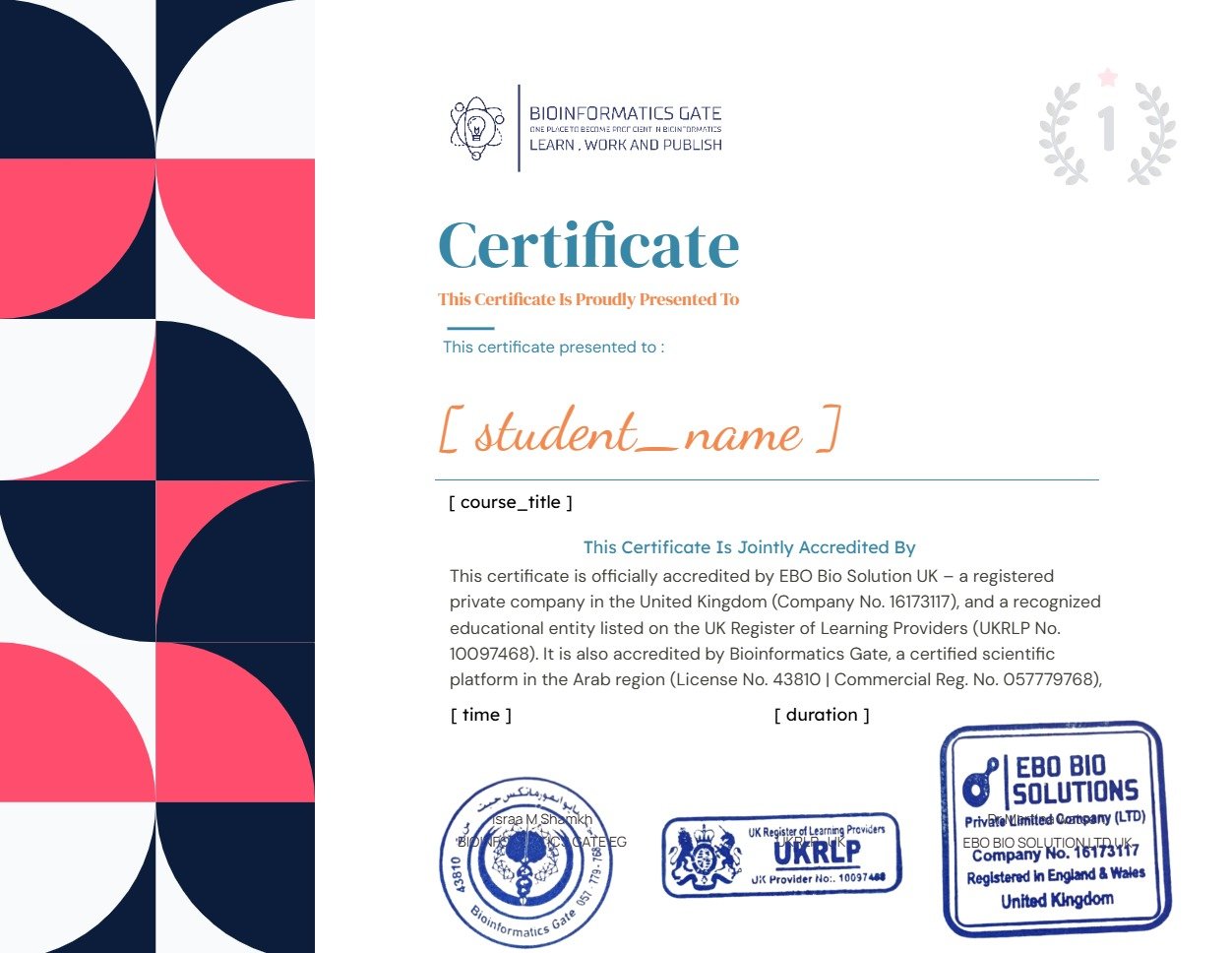
Earn a certificate
Bioinformatics Gate: Accredited in Egypt & UK. Certificates registered with Company House UK & UKRLP. Join us
Student Ratings & Reviews